- Why Your Warehouse Receiving Process Is Slower Than You Think
- How to Speed Up Receiving Process Without Losing Control
- How to Inspect Goods Quickly in High-Volume Environments
- How to Detect Damage Without Opening Package
- How to Prove Damage Upon Delivery and Reduce Disputes
- A More Effective Warehouse Receiving Process
- Moving Forward
A shipment arrives. The clock is ticking. Your team needs to decide—accept it or reject it—without slowing down operations or taking on unnecessary risk.
This is where most warehouse teams struggle. Not because they lack a warehouse receiving process, but because the process itself was never designed to balance speed, accuracy, and accountability at the same time.
The real challenge is not inspection. It is making the right decision fast, with enough confidence to stand behind it later.

Why Your Warehouse Receiving Process Is Slower Than You Think
Many operations assume delays come from workload or staffing. In reality, the issue often lies in how the warehouse receiving process is structured.
When inspection depends heavily on opening cartons, time becomes the bottleneck. The more thorough the check, the slower the process. Yet even with this effort, critical issues can still be missed—especially when damage is not externally visible.
This creates a paradox: the process is slow, but still unreliable. Teams spend more time inspecting, yet still face disputes, returns, or internal uncertainty.

How to Speed Up Receiving Process Without Losing Control
Improving efficiency is not about doing more in less time. It is about changing when and how decisions are made.
When companies focus on how to speed up receiving process, they often discover that the key is early-stage filtering. Instead of verifying every item equally, the process shifts toward identifying exceptions first.
This approach allows teams to move faster because they are no longer treating all shipments as high risk. Time is allocated where it matters, and routine receipts no longer consume unnecessary effort.
As a result, the receiving process becomes both faster and more controlled, rather than a trade-off between the two.

How to Inspect Goods Quickly in High-Volume Environments
Speed becomes critical when volume increases. In these environments, the ability to inspect goods quickly directly impacts throughput and labor efficiency.
However, speed without structure leads to inconsistency. Different operators may interpret conditions differently, and important signals can be overlooked under pressure.
To truly understand how to inspect goods quickly, organizations must move away from full inspection as the default. Instead, the focus shifts to rapid evaluation—recognizing signs of risk without interrupting flow.
This is where inspection becomes less about checking everything and more about identifying what should not be ignored.

How to Detect Damage Without Opening Package
One of the most persistent gaps in any warehouse receiving process is the inability to identify internal damage before unpacking.
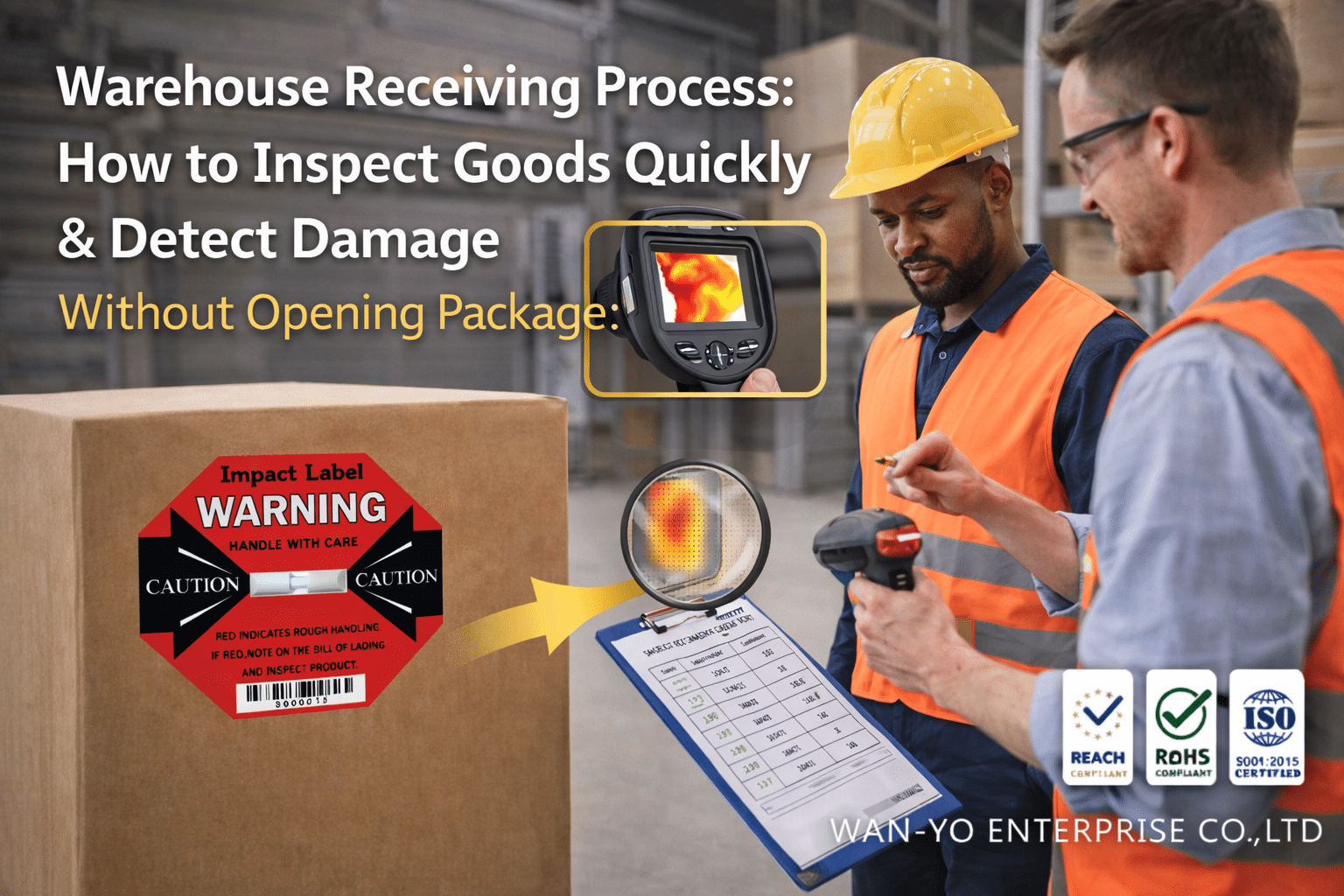
This is why the question of how to detect damage without opening package has become increasingly relevant.
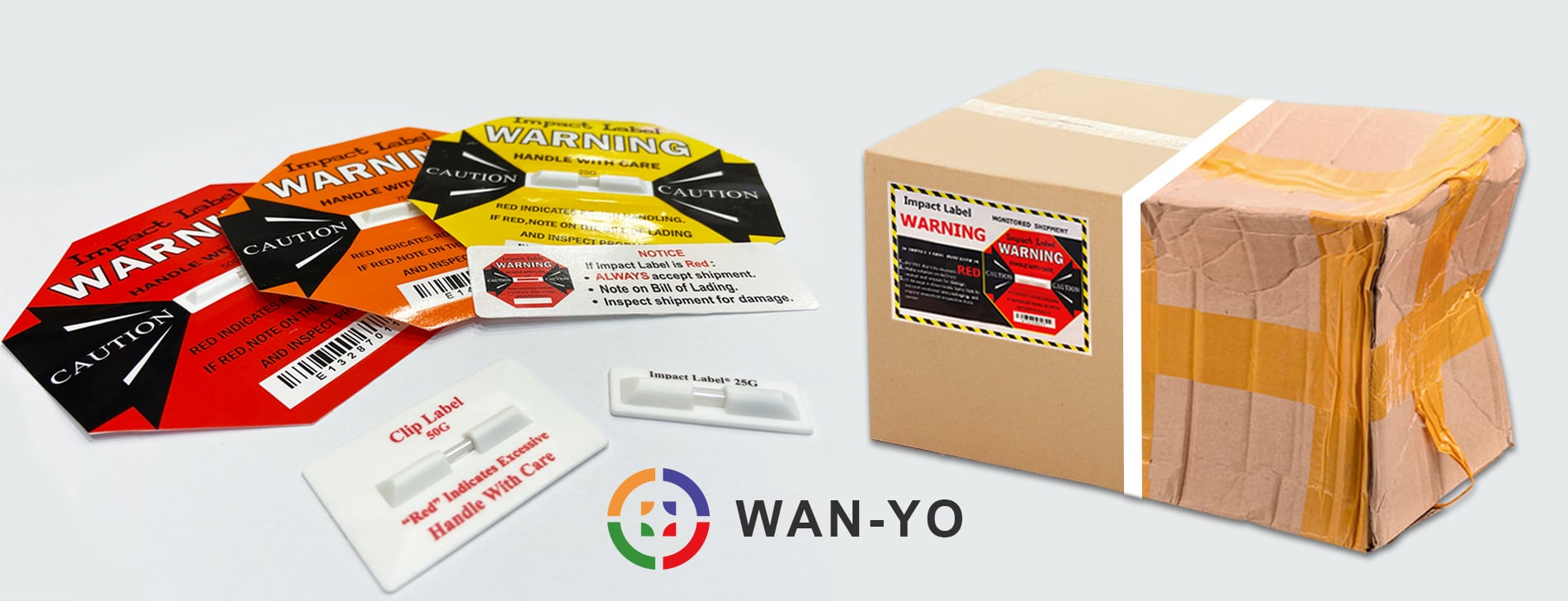
External packaging often fails to reflect what actually happened during transit. A carton may look intact while the contents inside have already been compromised due to shock, impact, or improper handling.
Relying solely on visual carton condition creates blind spots. And opening every package is not a scalable solution.
As a result, more operations are adopting methods that extend visibility beyond the surface—allowing teams to detect potential issues without interrupting the receiving flow.
This shift does not replace inspection. It redefines it.

How to Prove Damage Upon Delivery and Reduce Disputes
Identifying damage is only part of the equation. The real financial impact comes from what happens next.
Without clear evidence, it becomes difficult to determine responsibility. This is why understanding how to prove damage upon delivery is essential for any operation handling inbound goods.
In many cases, disputes arise not because damage is unclear, but because timing is. Did the issue occur during transit, or after receipt? Without objective indicators, the answer often depends on interpretation.
When the receiving process includes traceable signals, decisions become easier to justify. Conversations with carriers, customers, and internal stakeholders shift from opinion to evidence.
This reduces friction, shortens resolution time, and protects margins.
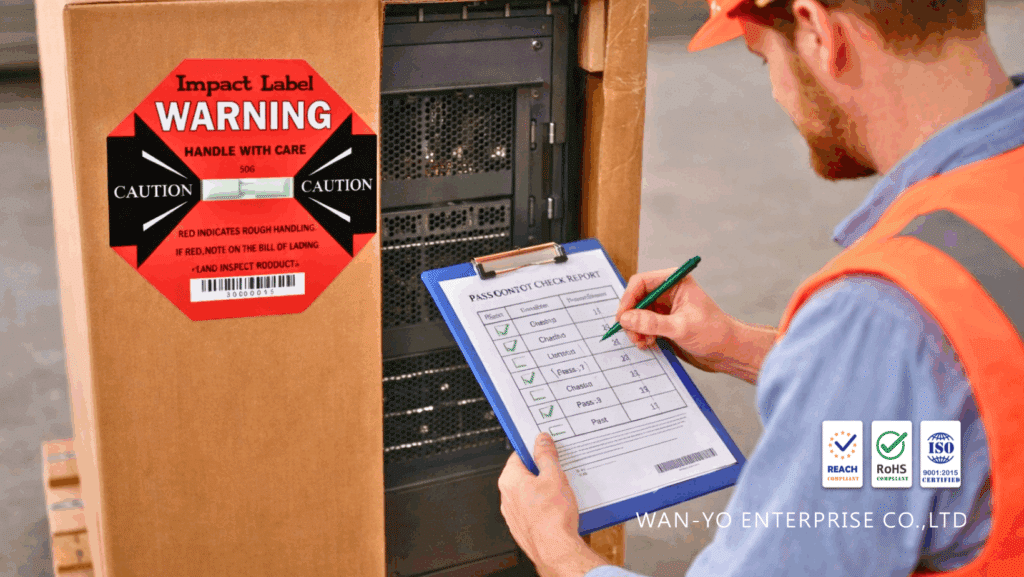
A More Effective Warehouse Receiving Process
An optimized warehouse receiving process is not defined by how much is inspected, but by how effectively decisions are made.
When organizations align speed with visibility, receiving becomes more than a checkpoint. It becomes a control point for risk, cost, and accountability.
The goal is not to slow down and check everything. It is to move faster with better insight.

Moving Forward
For teams looking to improve both efficiency and control, the next step is not adding more steps to the process. It is redesigning how information is captured at the moment of receiving.
If you are evaluating ways to speed up receiving process, improve accuracy, and strengthen your ability to prove damage upon delivery, there are practical approaches that can be implemented without disrupting existing workflows.
Understanding what is possible is often the first step toward building a more resilient operation.