- Prevent 1 star DOA reviews by Upgrading Your Logistics Strategy
- How to prevent concealed damage in home appliances During Transit
- Reduce appliance RMA return rate to Protect Your Profit Margins
- D2C appliance packaging protection: Deploying the Impact Indicator 2
- Advanced Defense: The Leaning Label Plus 20°/80°
- Securing the Supply Chain with Digital Evidence (Free GTS)
- Secure Your E-Commerce Margin Today
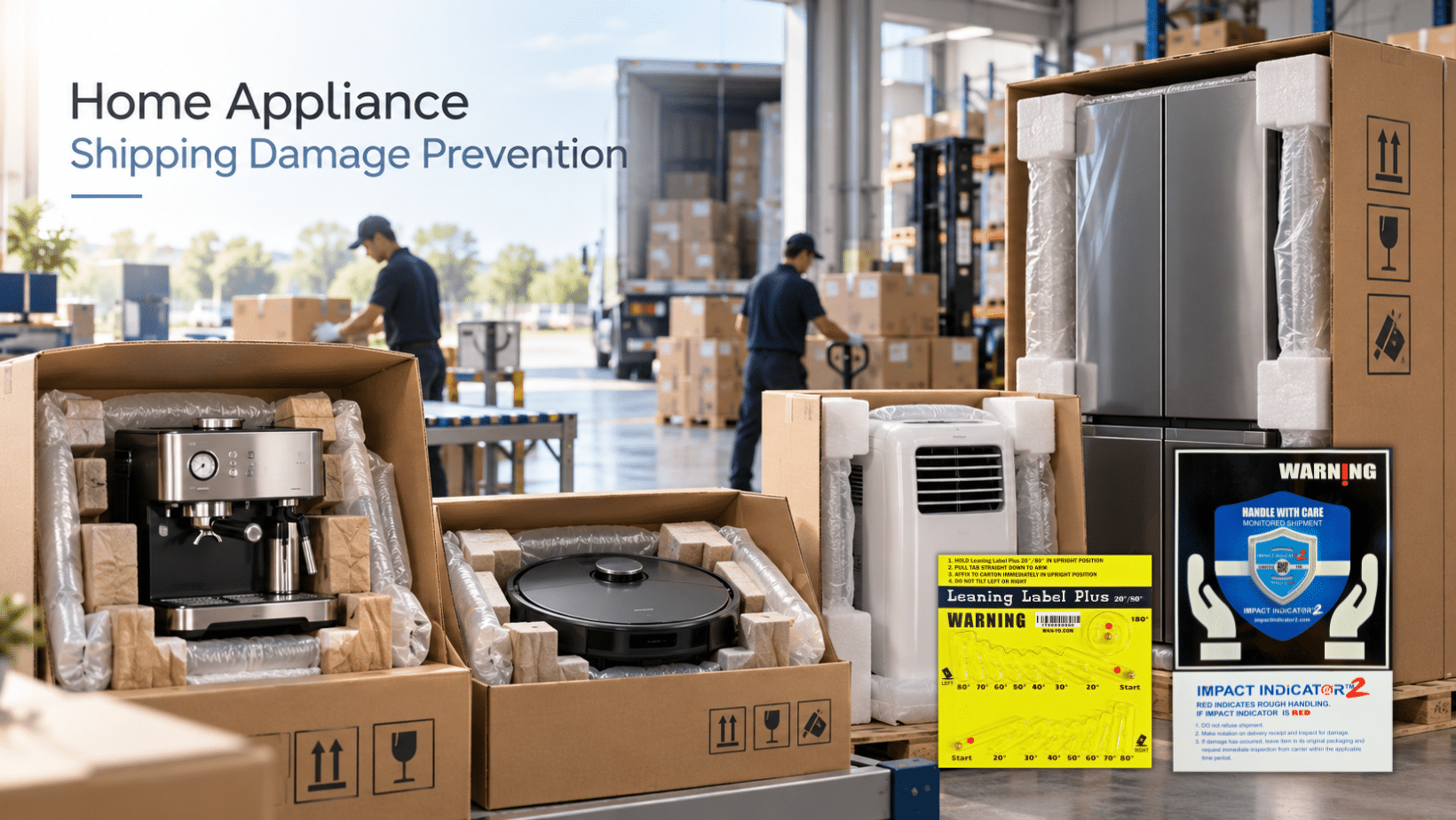
Home appliance shipping damage prevention is no longer just a secondary packaging issue; it is the most critical strategic factor in protecting your direct-to-consumer (D2C) brand’s profitability and reputation. In the rapidly growing e-commerce market, consumers are increasingly purchasing high-value, heavy items directly online. Products such as premium espresso machines, smart refrigerators, robotic vacuums, and portable air conditioners are being shipped daily across the globe.
However, the logistics network was originally designed for sturdy, standard-sized boxes, not complex mechanical appliances. When these fragile, heavy machines meet the chaotic environment of last-mile delivery, the results are often catastrophic. To survive in this competitive landscape, supply chain directors and e-commerce operations managers must upgrade their transit monitoring strategies to ensure perfect unboxing experiences.
Prevent 1 star DOA reviews by Upgrading Your Logistics Strategy
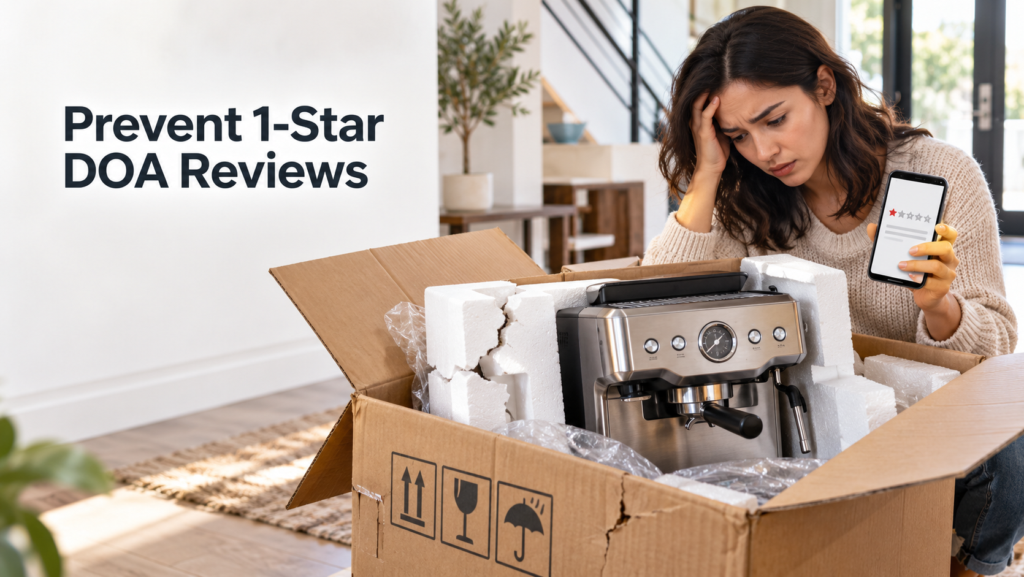
The nightmare of every e-commerce operations manager is the DOA (Dead on Arrival) product. A customer waits eagerly for a $1,000 premium appliance, unboxes it, plugs it in, and nothing happens. In today’s digital age, the immediate reaction is not to call customer service calmly. Instead, they leave a devastating 1-star review on your website, Amazon, or social media platforms.
To Prevent 1 star DOA reviews, you must understand why they happen. High-end appliances contain delicate components such as spring-suspended motors, copper welding joints, glass touch panels, and liquid coolants. During last-mile delivery, couriers under immense time pressure frequently drop, drag, or violently tip these heavy boxes. Traditional packaging materials like expanded polystyrene (EPS) foam can crack under sudden, high-energy impact, leaving the internal mechanics completely exposed to the shockwave.
To stop these negative reviews from destroying your customer acquisition costs and brand trust, you must implement a proactive monitoring system that holds freight carriers and last-mile couriers strictly accountable for their handling behavior.
How to prevent concealed damage in home appliances During Transit
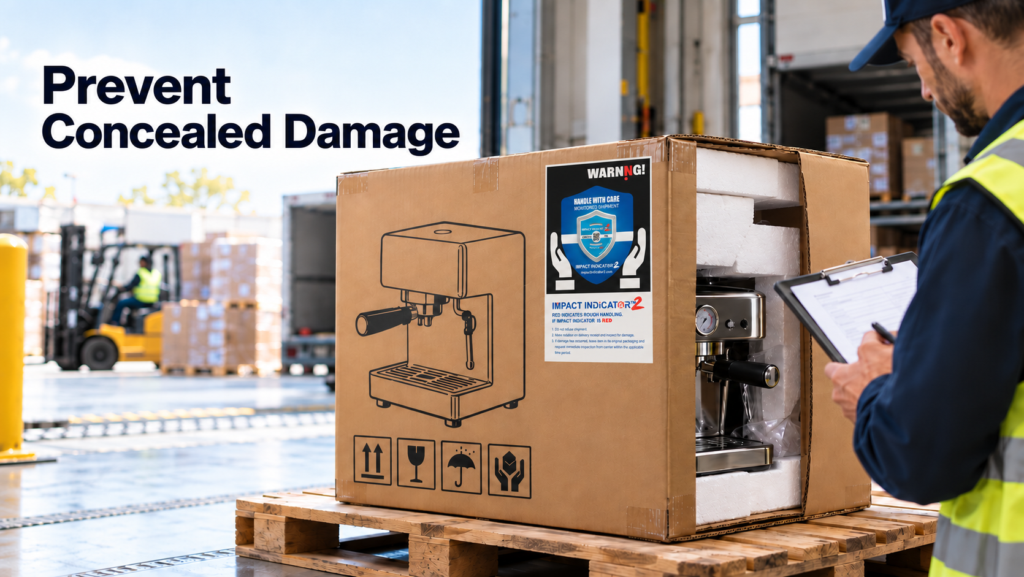
One of the most complex challenges in logistics is concealed damage. This occurs when a courier severely drops or overturns a heavy package, but the external corrugated cardboard box bounces back to its original shape. The receiving warehouse or the end customer signs the Proof of Delivery (POD) document because the outside looks perfectly fine. Days later, when the appliance is powered on, the internal components fail. Because the POD was signed clean, the shipping carrier will automatically reject your freight damage claim.
If you are wondering How to prevent concealed damage in home appliances, the answer lies in visual psychology and precise mechanical monitoring. You must equip your packaging with a reliable Shock Indicator and a highly sensitive tilt indicator.
Did you know that a simple label can actively change human behavior? A Shock Indicator acts as a visual, silent supervisor. When warehouse staff and local couriers see a bright warning indicator on the box, they naturally realize the cargo is being monitored and handle it with significantly more care. This psychological deterrent stops the rough handling before the concealed damage even occurs.
Reduce appliance RMA return rate to Protect Your Profit Margins
When an appliance is damaged, the financial loss goes far beyond the manufacturing cost of the broken machine. The hidden costs of reverse logistics will quickly drain your net profit.
When dealing with large appliances, the financial leak includes double shipping fees, expensive labor costs for engineering tests, and severe brand damage. Every time a customer initiates a Return Merchandise Authorization (RMA) for a heavy, bulky item, your company loses the initial shipping cost, pays for the expensive return freight, and spends countless administrative hours arguing with carriers.
You must deploy a data-driven strategy to Reduce appliance RMA return rate. By applying specialized indicators, you draw a clear line of responsibility. If a label turns red during transit, you immediately know the shipping carrier is at fault. This undeniable physical evidence transforms a frustrating argument with a carrier into a data-backed insurance claim. In a real-world case within the consumer electronics sector, implementing proper impact and tilt indicators successfully dropped the cargo damage rate from a staggering 13% down to just 1%.
D2C appliance packaging protection: Deploying the Impact Indicator 2
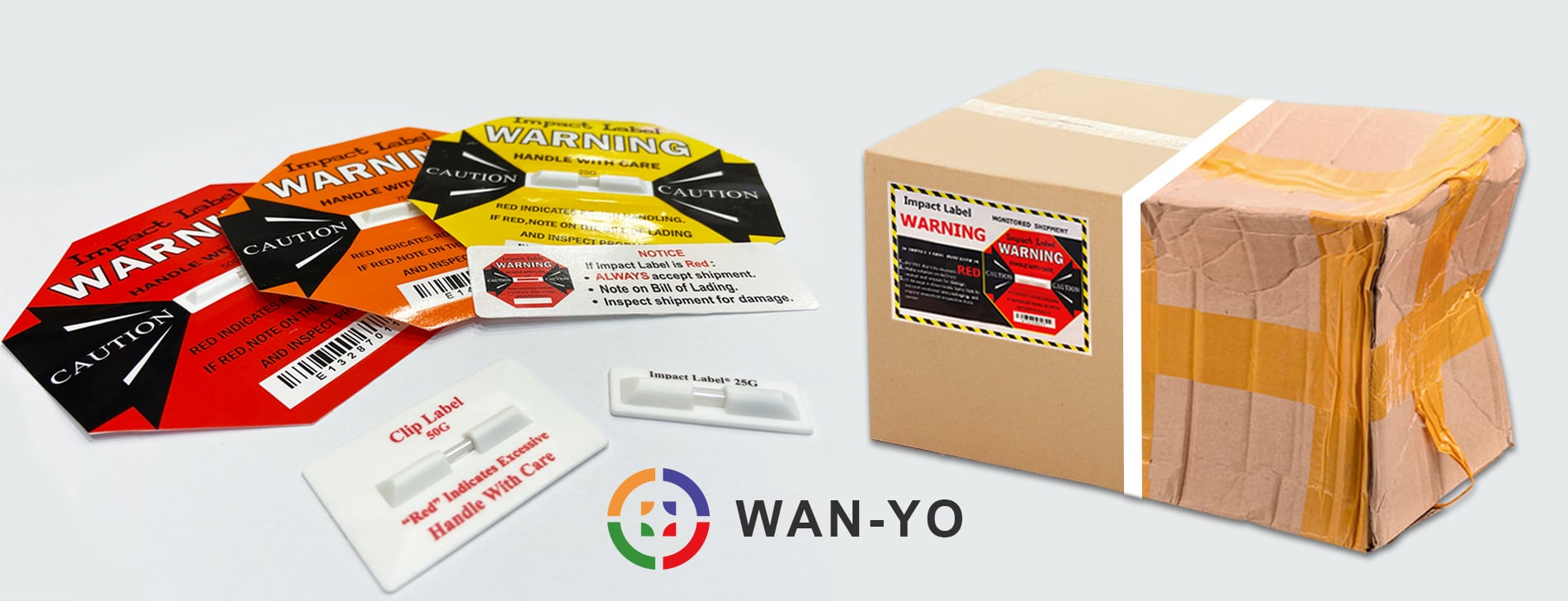
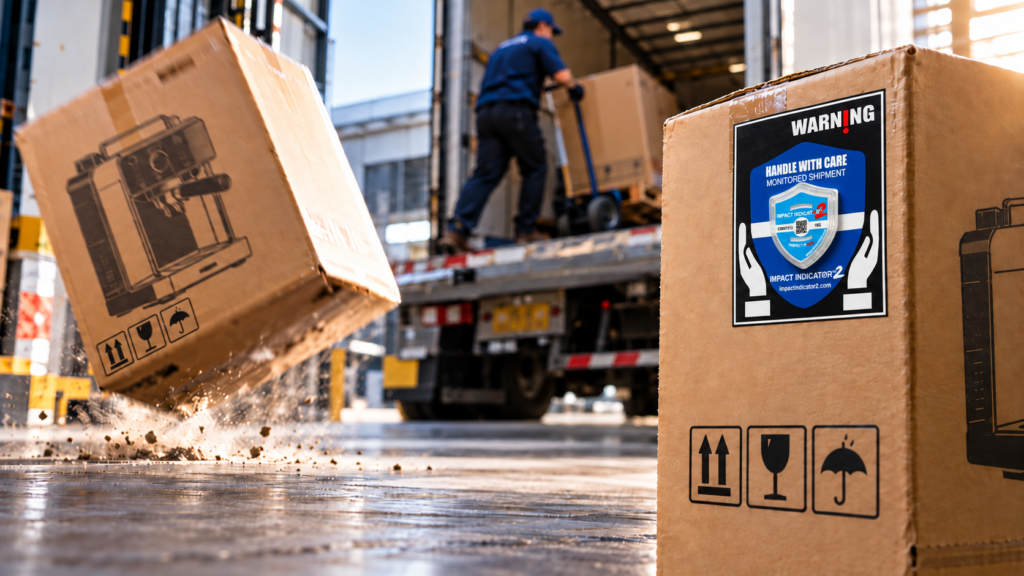
To achieve total D2C appliance packaging protection, your first line of defense against vertical drops and harsh vibrations is the Impact Indicator 2.
Many e-commerce brands hesitate to use transit monitors because legacy American imported brands are notorious for two massive problems: high costs and false alarms. Traditional labels often suffer from shock indicator false activation, turning red simply from normal forklift vibrations rather than actual drops.
The Impact Indicator 2 solves this completely. It utilizes a highly calibrated physical design that relies on precise physics rather than overly sensitive delicate internal components. This ensures that the indicator only activates when the specific impact threshold is genuinely breached, resulting in zero false alarms.
Furthermore, the Impact Indicator 2 provides 100% of the precision, visual deterrent effect, and tamper-proof security required by international logistics standards, but with zero brand premium. It is the most cost-effective Shock Indicator solution, allowing procurement managers to drastically reduce their transit monitoring expenditures while maintaining strict quality control.
Advanced Defense: The Leaning Label Plus 20°/80°
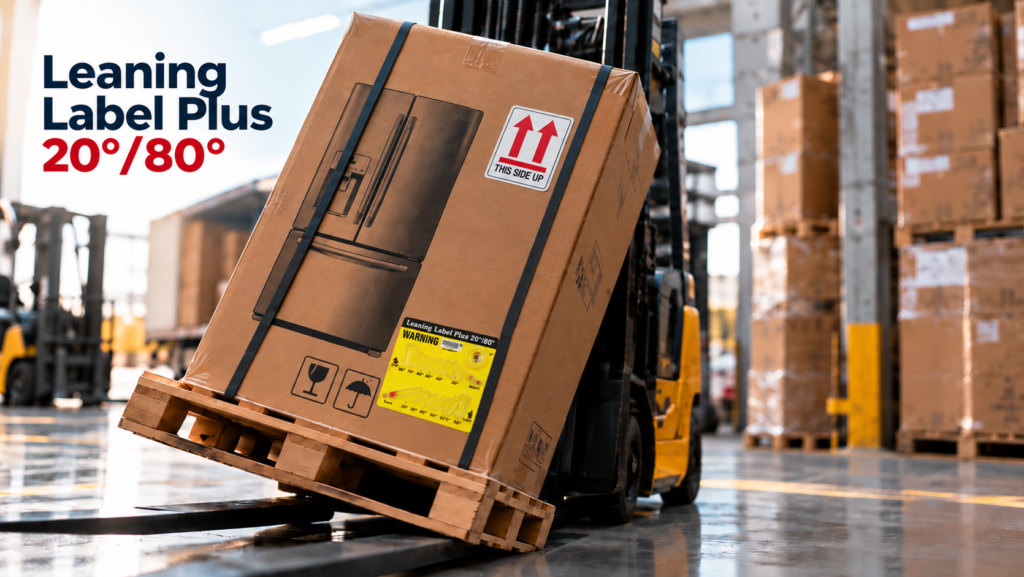
While a Shock Indicator detects drops, appliances face another massive threat: severe inclination. Products containing compressors (like refrigerators and wine coolers), fluid reservoirs (like espresso machines), or top-heavy mechanical structures absolutely cannot be tilted.
Standard tilt monitors in the market typically only begin detection at a 30-degree angle. However, for ultra-sensitive premium appliances, a 20-degree tilt is already enough to cause cooling oil to flood into the wrong pipelines, causing the compressor to burn out upon startup.
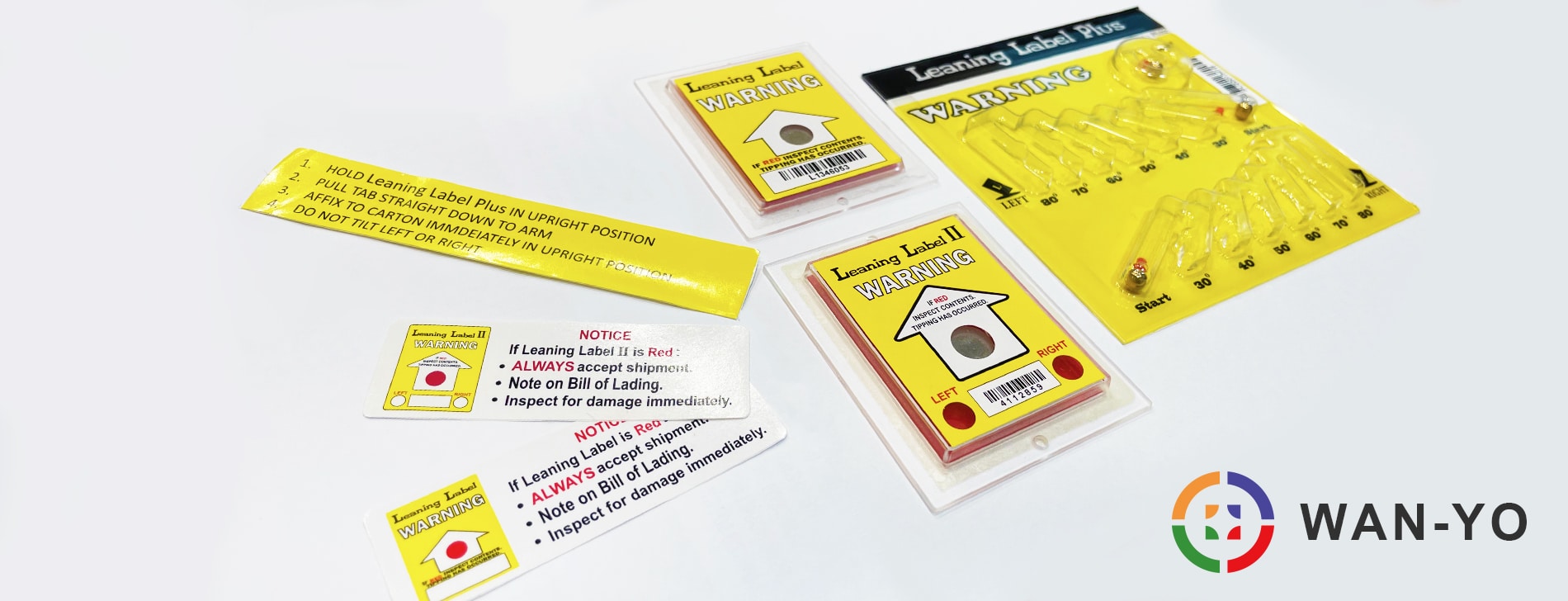
To provide ultimate D2C appliance packaging protection, you must utilize the Leaning Label Plus 20°/80°. This breakthrough tilt indicator breaks industry limits by offering exclusive 20° and 30° early-stage tilt monitoring.
The Leaning Label Plus 20°/80° accurately records exact tilt degrees ranging from 20° to 80° in both left and right directions, plus a 180° complete overturn detection. Crucially, it features a patented anti-backtrack groove mechanism. Once an indicator brass ball enters a specific degree pocket, it is permanently locked in place. Even if a guilty courier tries to stand the appliance back up, the label will not reset, providing you with undisputable evidence for insurance claims.
Securing the Supply Chain with Digital Evidence (Free GTS)
Physical protection is only half the battle; the other half is digital accountability. The biggest headache for customer service managers is the lack of data to prove exactly where the appliance was damaged.
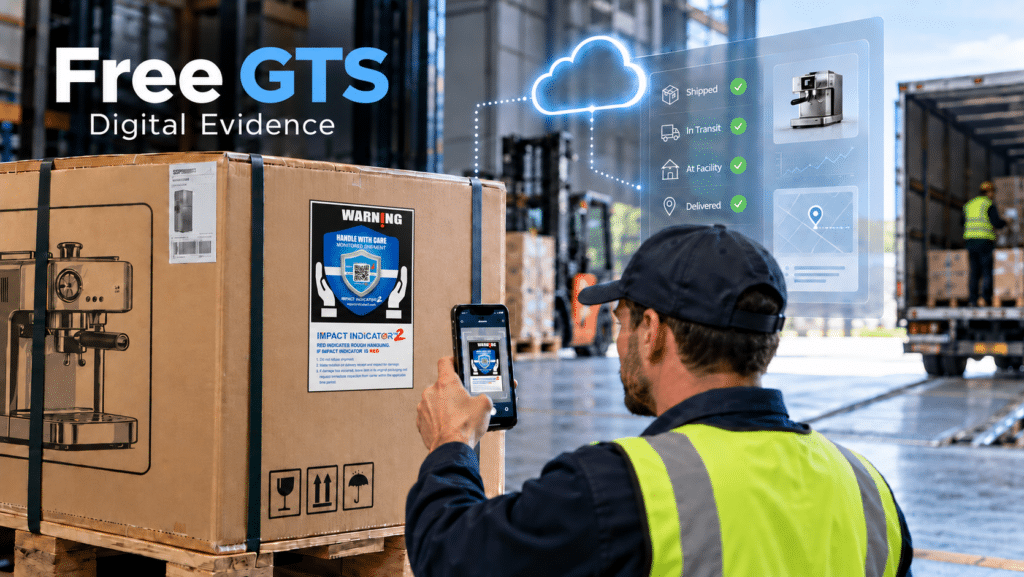
To solve this, WAN-YO provides the Goods Tracking System (GTS), a cloud-based logistics tracking platform that is completely free for all customers. There are no “Pro” versions, no hidden fees, and no annoying commercial advertisements.
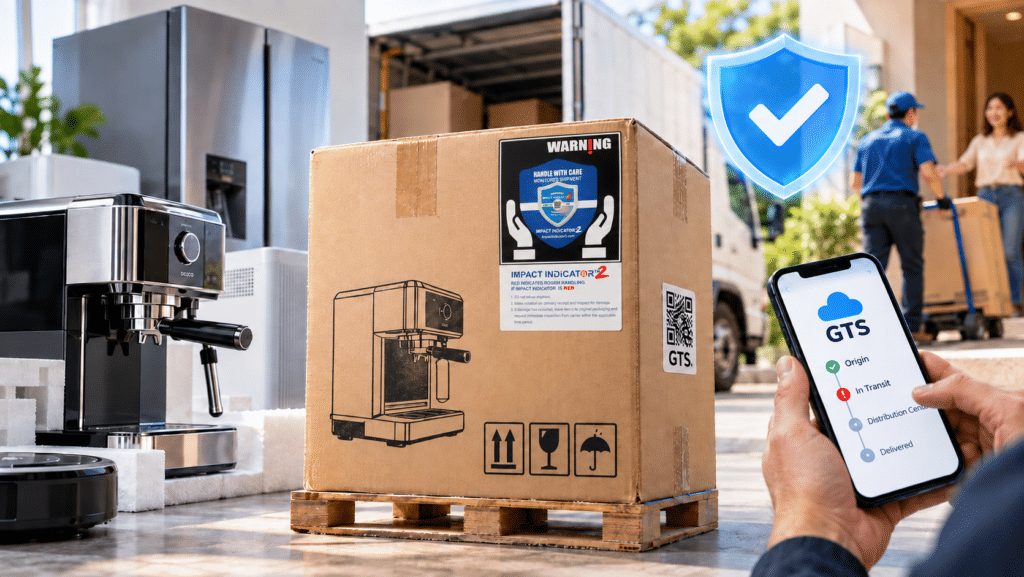
By scanning the QR code on the Impact Indicator 2 or the Leaning Label Plus 20°/80°, your logistics team and the end-customer can upload the cargo’s status directly to the cloud. You get real-time accountability, allowing your team to see exactly where and when the transit risk occurred.
Secure Your E-Commerce Margin Today
Do not let reckless last-mile delivery drivers ruin your D2C brand’s reputation and drain your operational budget. By combining the mechanical precision of the Impact Indicator 2 with the ultra-sensitive overturn monitoring of the Leaning Label Plus 20°/80°, you create a flawless packaging protocol.
Stop relying on basic cardboard and start investing in psychological deterrents and physical evidence. Home appliance shipping damage prevention starts with making the smart choice for your supply chain today.
Ready to protect your appliances and reduce your RMA costs? WAN-YO offers customized labels and provides free samples and free shipping so your engineering team can test the solution risk-free. As the largest manufacturer in Asia with a 35% global market share, we are here to help you ship with absolute confidence.
Contact our expert team today for a free packaging consultation and request your free testing samples!