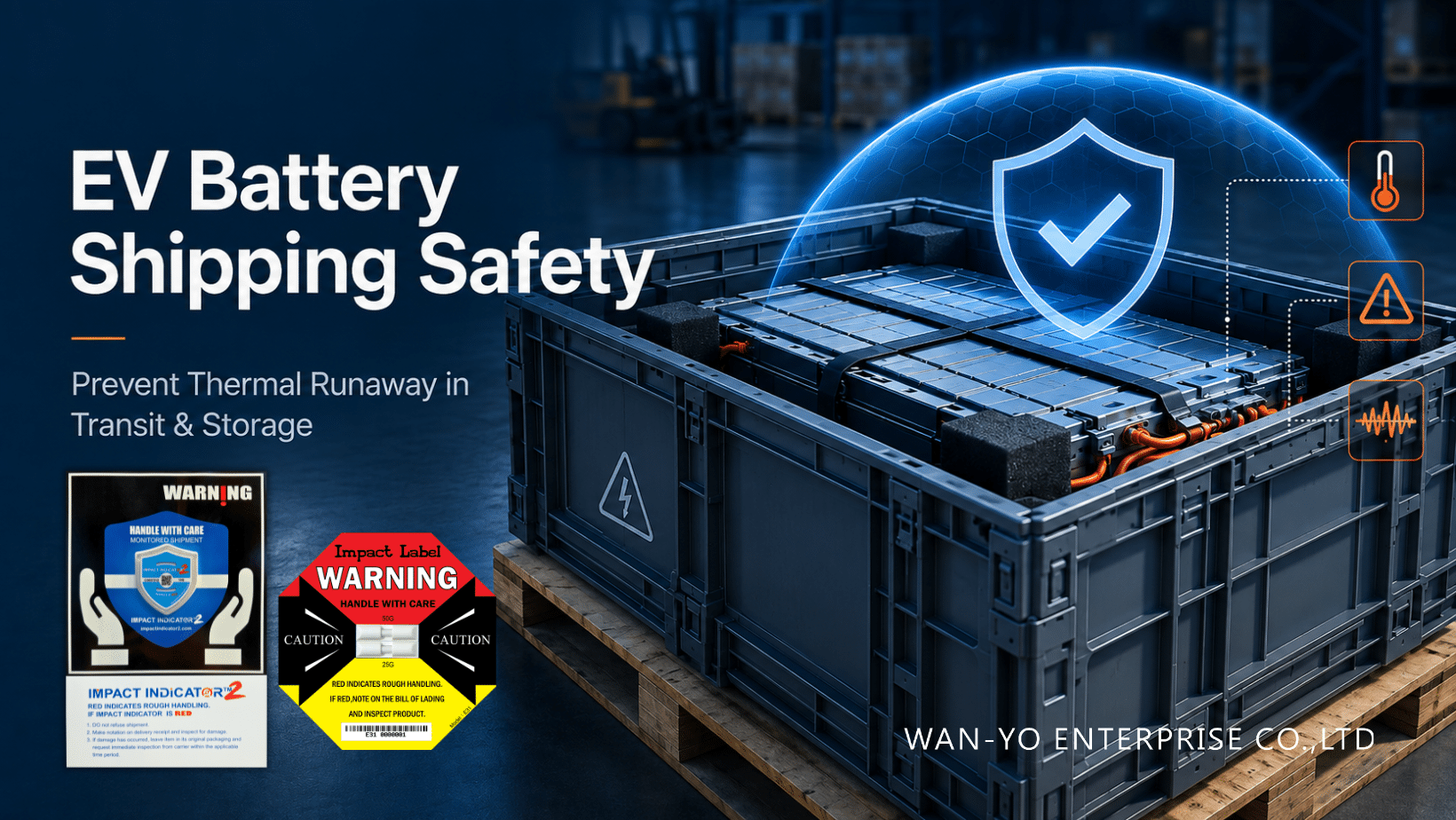
Achieving maximum EV battery shipping safety is the most critical challenge for the global automotive and technology supply chains today. As the demand for electric vehicles, solar energy storage, and AI data centers grows, the international transportation of large lithium-ion batteries has massively increased. However, these power sources are highly dangerous cargo. A single improper drop or severe impact during transit can easily trigger catastrophic fires. Therefore, implementing a strict system for lithium battery thermal runaway prevention is no longer just an option; it is a mandatory requirement to protect human lives, secure multi-million-dollar facilities, and maintain global logistics compliance.
Shipping large lithium batteries is fundamentally different from shipping standard electronics. When you ship standard cargo, a dropped box simply means a broken product and a financial loss. When you drop an EV battery, you are creating a ticking time bomb. To protect your business, you must upgrade your packaging strategy from basic physical protection to proactive, data-driven shock monitoring.
The Invisible Danger: Why Standard Visual Inspections Fail
To understand the urgent need for lithium battery transit shock monitoring, supply chain managers must understand the physics of a lithium-ion cell. Inside every battery, a very thin, fragile micro-separator divides the positive and negative electrodes.
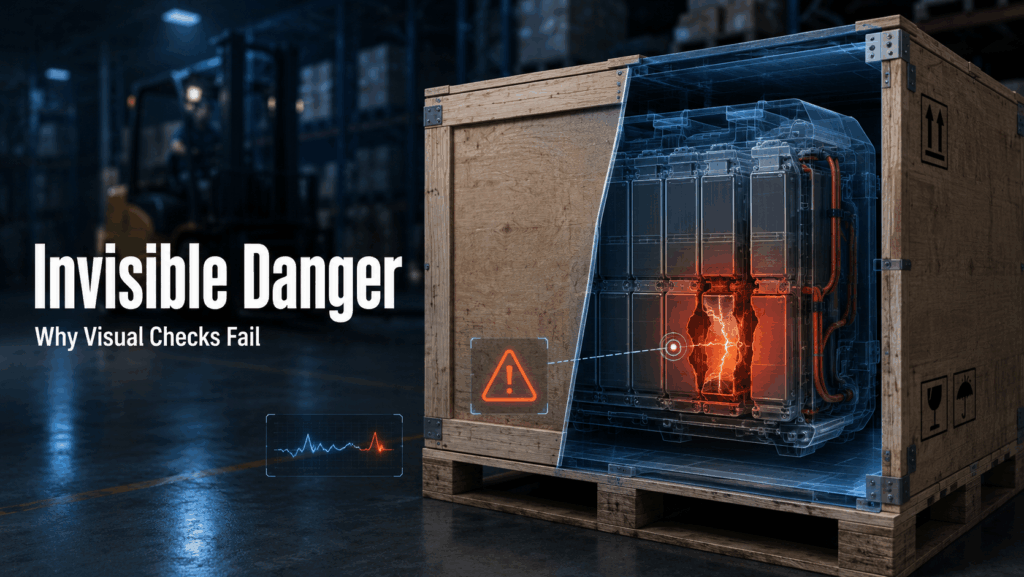
When a heavy wooden crate containing an EV battery is dropped by a careless forklift driver, the external packaging might look completely fine. Standard wooden crates and heavy-duty cardboard are designed to bounce back and hide external dents. The warehouse receiving team will perform a standard visual inspection, see no damage on the outside box, and move the cargo directly into the main indoor storage facility.
This is a deadly mistake. The extreme G-force impact penetrates the packaging and tears the fragile internal separator inside the battery cell. This creates an internal micro-short circuit. The battery does not catch fire immediately. Instead, the internal temperature slowly builds up over several hours or even days. Once the temperature reaches a critical threshold, it triggers a chain reaction. This process is exactly why lithium battery thermal runaway prevention is so difficult without specialized monitoring tools. The damage is entirely invisible until the fire starts.
Navigating Strict UN3480 Shipping Requirements
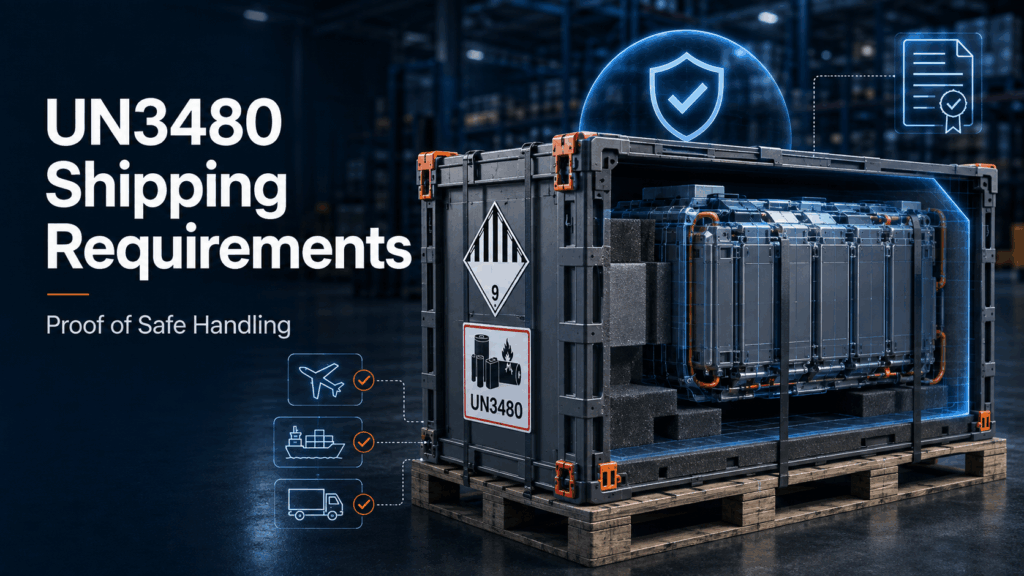
International aviation, maritime, and road transport authorities classify lithium-ion batteries as Class 9 Hazardous Materials (Hazmat). Shipping these items requires strict adherence to UN3480 shipping requirements.
Under UN3480 regulations, batteries must be packaged to prevent accidental activation and short circuits during transport. They must be secured in strong, rigid outer packaging. However, simply placing a battery in a strong box does not guarantee compliance if the handlers treat the box violently.
If your company fails to ensure safe handling, the consequences are severe. Airlines and ocean freight carriers will instantly ban your company from their networks. Furthermore, if an unmonitored battery causes a fire on a cargo ship or inside a customs warehouse, your company will face massive legal liabilities and global media backlash. To maintain true hazmat packaging compliance, you need undeniable proof that the battery was handled according to the strict safety parameters throughout the entire journey.
Shock Indicators: The Ultimate Tool for Hazmat Packaging Compliance
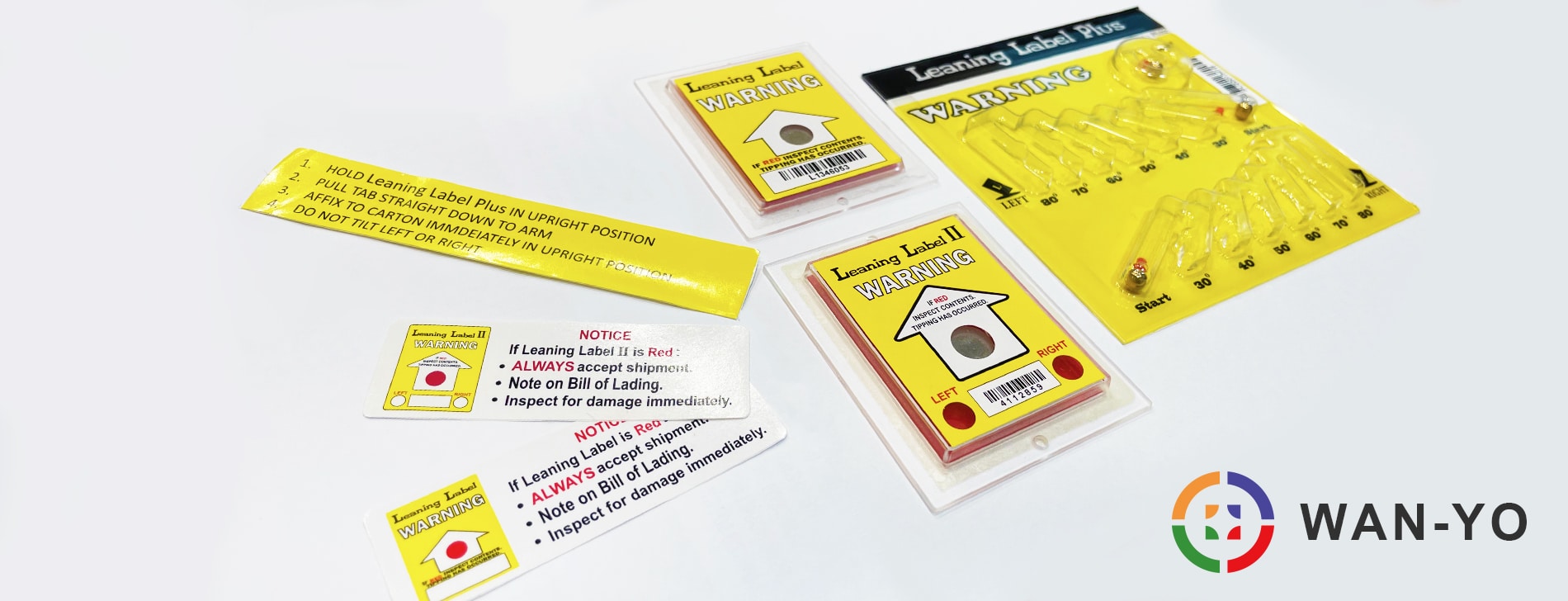
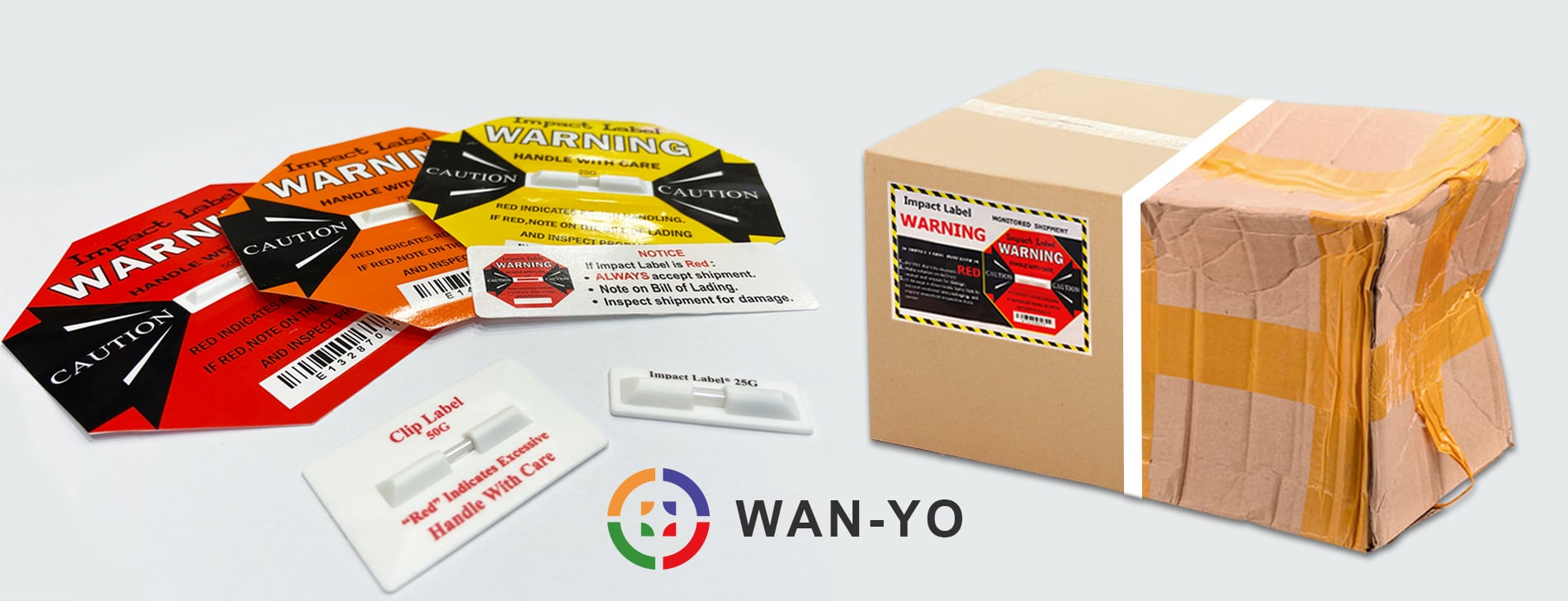
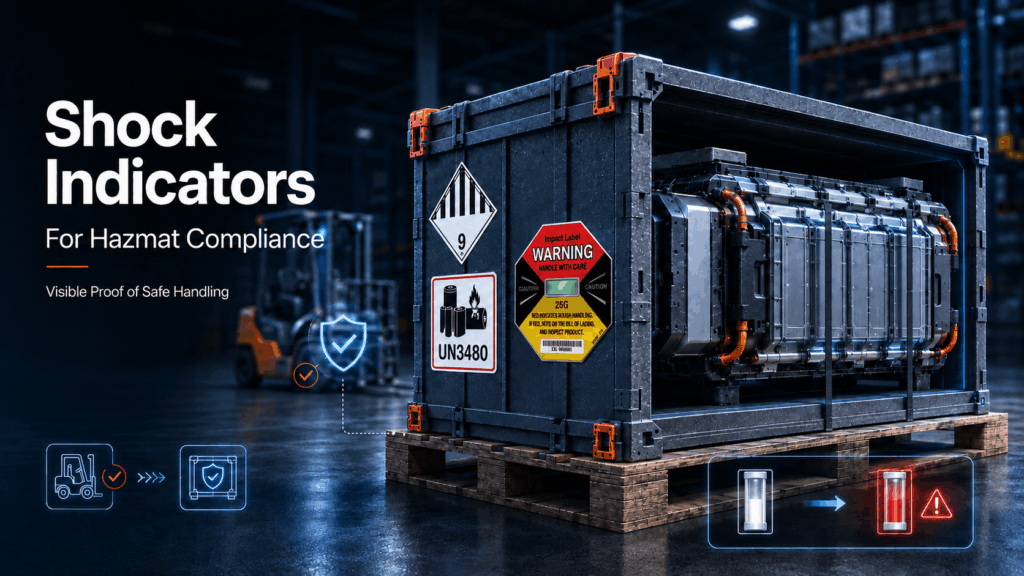
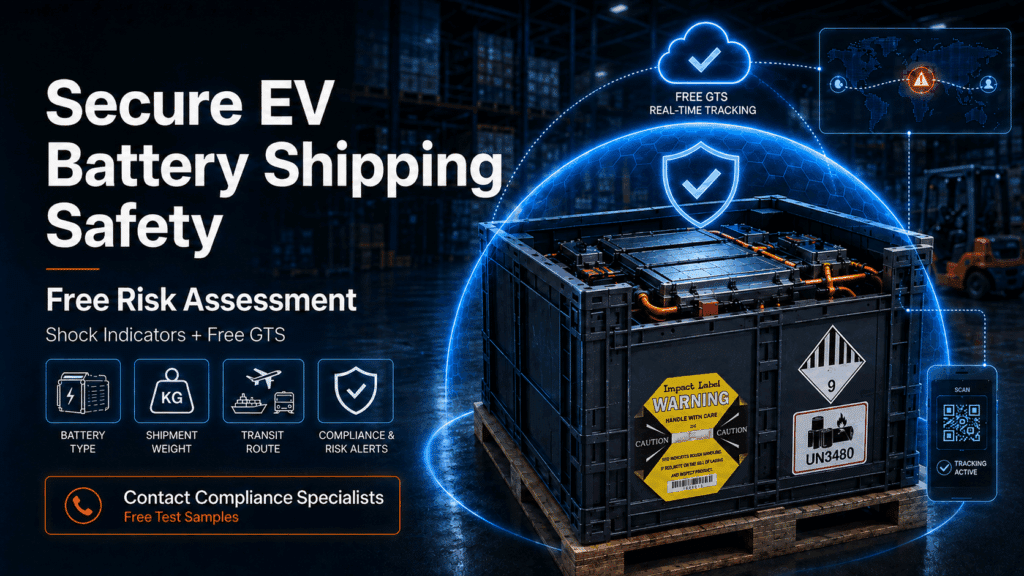
The most effective and affordable method to ensure hazmat packaging compliance is the installation of a physical shock indicator. WAN-YO’s Impact Label acts as your first line of defense against invisible battery damage.
A shock indicator is a highly visible, tamper-proof label that you apply directly to the outside of the battery crate before shipping. It contains a highly engineered mechanical liquid tube that instantly turns bright red if the cargo experiences an impact beyond a specific G-force threshold (such as a 25G or 37G impact).
This technology completely solves the “invisible danger” problem. It provides two critical safety functions for EV battery shipping safety:
-
The Psychological Deterrent: When logistics drivers, port workers, and warehouse staff see the bright red and yellow warning label on the Hazmat box, they instantly realize the cargo is actively monitored. This psychological pressure forces them to handle the heavy battery crates with extreme care, drastically reducing the total number of dropping incidents.
-
The Irreversible Physical Warning: If a severe drop does happen, the label turns red permanently. You cannot reset it. This gives the receiving staff a clear, undeniable visual warning that the battery inside may have suffered an internal short circuit, even if the wooden crate looks perfectly safe.
The Quarantine SOP: Managing Lithium Battery Transit Shock Monitoring
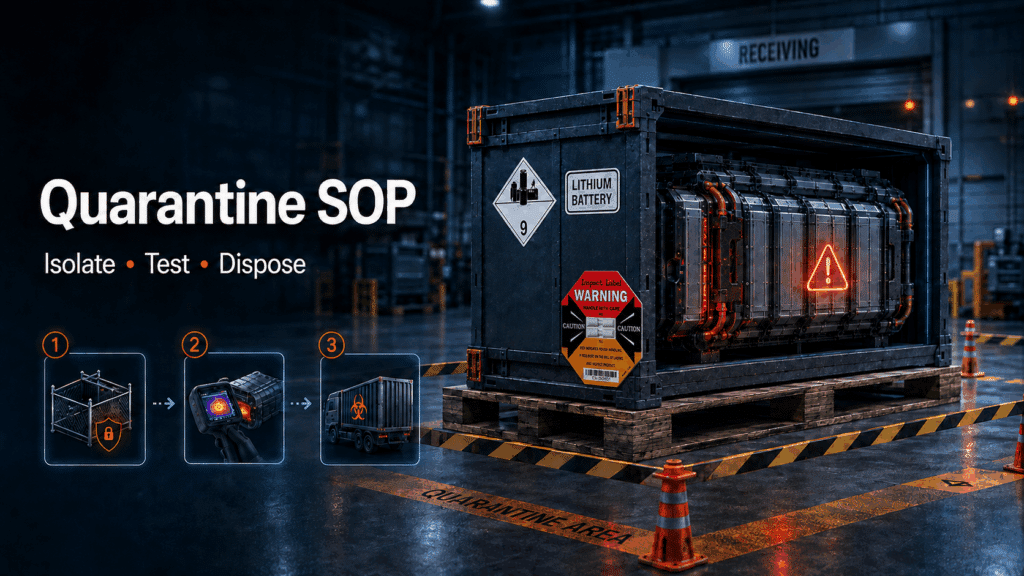
When dealing with Class 9 Hazmat cargo, knowing that an impact occurred is only the first step. You must have a Standard Operating Procedure (SOP) to manage the risk. By utilizing lithium battery transit shock monitoring, your warehouse team must follow this strict Quarantine SOP whenever a WAN-YO Impact Label turns red:
-
Step 1: Immediate Isolation (Do Not Store Indoors) If the receiving dock worker sees a red impact label, they must absolutely refuse to bring the crate into the main warehouse. The cargo must be immediately isolated in a designated outdoor fire-proof bunker or a safe quarantine area, far away from other expensive inventory and human personnel.
-
Step 2: Safe Diagnostic Testing Once isolated, professional electrical engineers wearing proper safety gear can open the crate. They will conduct advanced voltage, impedance, and thermal imaging tests to check for internal micro-shorts.
-
Step 3: Safe Disposal or Return If the battery is damaged, it must be safely discharged and disposed of according to local environmental laws, or returned to the manufacturer using specialized explosion-proof transport boxes. It must never be installed into a vehicle or server rack.
Upgrading Global Transparency with the Free GTS Platform
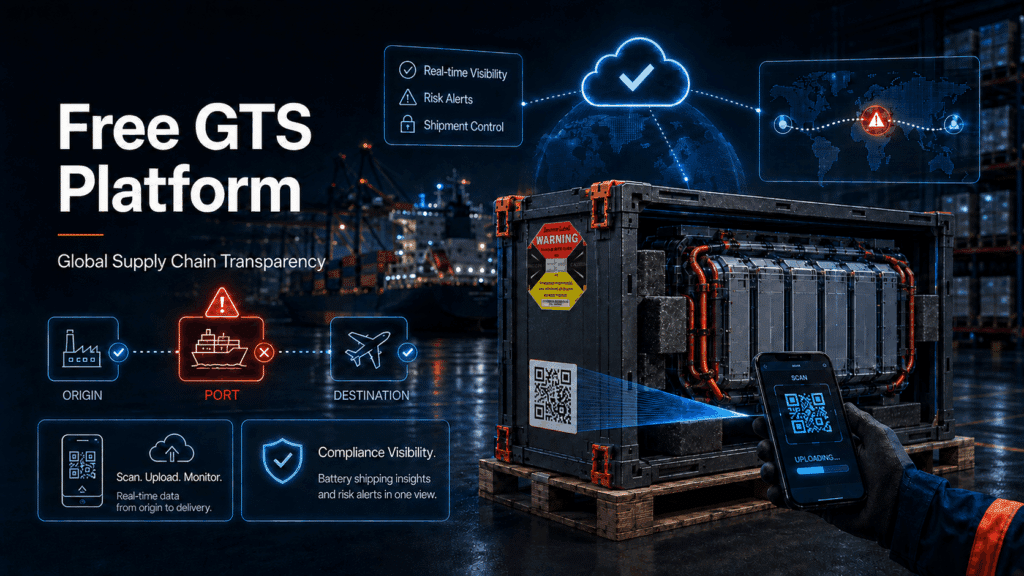
Modern UN3480 shipping requirements demand clear accountability. To manage global supply chains, WAN-YO provides the Goods Tracking System (GTS)—a cloud-based logistics platform that is 100% free of charge. There are no subscription fees and no hidden software costs.
Before shipping, your team scans the QR code on the Impact Label and uploads the battery’s safety status to the GTS cloud. When the cargo arrives at an international port, the local partner scans it again. If a severe drop occurs during an ocean transit, the label turns red, and the port worker scans the triggered label.
The GTS immediately alerts your global compliance officers. You can stop the damaged battery at the port and prevent it from being loaded onto an airplane or delivered to an end-customer. This digital transparency ensures perfect hazmat packaging compliance and permanently protects your brand reputation.
Secure Your EV Battery Shipping Safety Today
Do not gamble your corporate facilities, employee lives, and global reputation on basic visual inspections. As the lithium-ion market expands, the risk of catastrophic fires will only increase. You must take proactive control of your logistics network.
Implement WAN-YO’s industry-leading shock indicators and our free Goods Tracking System to build a flawless safety perimeter around your dangerous goods.
Simply tell us 4 basic details:
-
Your specific battery types (EV modules, server racks, energy storage, etc.)
-
The total gross weight of your shipments
-
Your primary transit routes (Air freight, ocean freight, or rail)
-
Your current hazmat packaging compliance challenges
Our specialized engineering team will calculate your impact profile for free and recommend the exact shock indicator sensitivity required for your shipments.
FAQ About Battery Shipping
Q1: Which G-force sensitivity should I choose for EV battery shipping safety? Because large EV batteries and AI server backup batteries are extremely heavy and sensitive, we highly recommend lower G-force indicators. A 25G or 37G Impact Label is usually the perfect choice to detect the low-frequency, high-energy impacts that cause internal cell damage.
Q2: Does using a shock indicator fulfill UN3480 shipping requirements? While the UN3480 code dictates the legal packaging structure, adding a shock indicator goes beyond the basic legal requirement to provide active operational safety. It provides the audit trail and handling visibility that major automotive brands and airlines now strictly demand from their suppliers.
Q3: Can the shock indicator prevent a fire by itself? The label itself does not stop a fire, but it is the ultimate tool for lithium battery thermal runaway prevention. By turning red, it gives your team the critical warning needed to isolate the battery before the thermal runaway sequence reaches the explosion stage inside your facility.